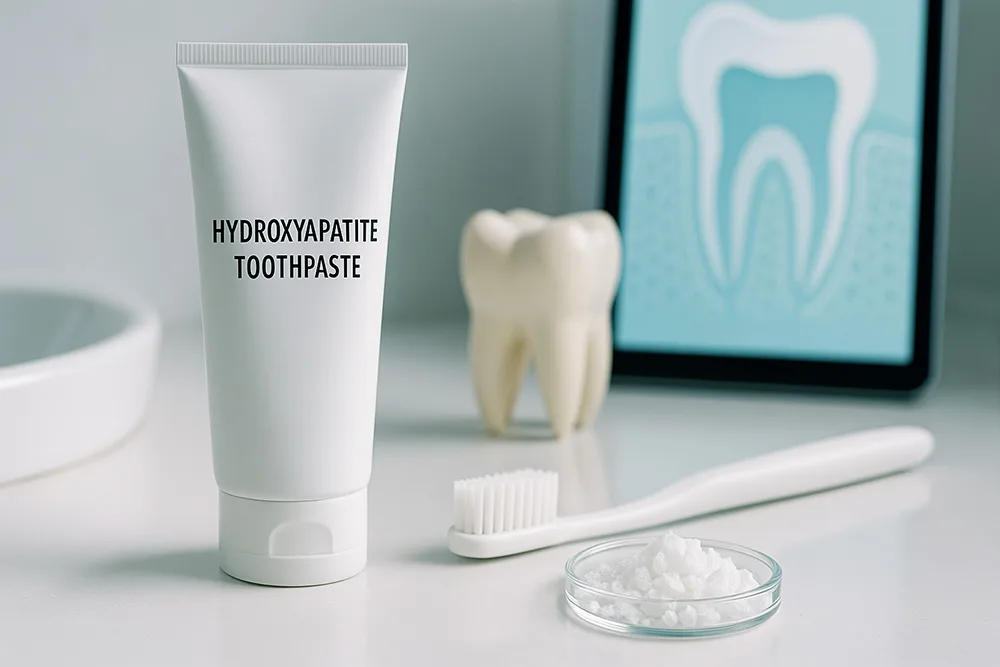
Hydroxyapatite toothpaste has become a strong product idea for oral care brands that want a modern enamel care story.
Consumers are no longer looking only for fresh breath or basic whitening. They also care about oral health, enamel health, gentle cleaning, and whether the toothpaste is safe for everyday use.
For brand owners, retailers, distributors, dental clinics, and e-commerce sellers, this creates a clear B2B opportunity.
The product can fit many directions, including fluoride-free toothpaste, sensitive care, whitening care, family oral care, and premium clinic-style products.
As an oral care manufacturer, Lidercare helps brands develop toothpaste products with formula support, packaging options, private label service, and contract manufacturing.
This article explains how brands can turn this ingredient trend into practical product ideas for retail, wholesale, and OEM projects.
Why This Toothpaste Concept Is Growing
Hydroxyapatite is a naturally occurring mineral related to the structure of tooth enamel.
It contains calcium and phosphate, which are also key mineral components found in teeth.
Because of this, many consumers connect the ingredient with enamel health, daily protection, and gentle oral care.
Some buyers search for toothpaste that strengthens enamel, supports the natural remineralization process, or helps maintain a clean smile.
For brands, this search demand is useful. It shows that consumers want more than a simple mint toothpaste.
They want a product with a clear formula story.
Studies suggest that hydroxyapatite can be useful in enamel care and sensitivity-focused oral care formulas. For B2B buyers, this makes the ingredient easier to explain on product pages, retail shelves, and sales presentations.
The key is to use safe wording.
Brands can talk about enamel care, daily oral health support, gentle cleaning, and sensitive-feeling teeth. They should avoid strong medical claims unless the formula and target market allow them.
How Brands Can Position the Product
This toothpaste concept can sit between traditional fluoride toothpaste and clean-label oral care.
Some brands use it for a fluoride-free product line. Others use it to upgrade a whitening toothpaste, sensitive care toothpaste, or family toothpaste range.
The product can also support premium positioning.
It feels more advanced than a basic daily toothpaste, but it is still easy for consumers to understand.
This makes it useful for Amazon brands, pharmacy chains, supermarket buyers, dental clinic brands, and distributors.
For B2B planning, the first question is simple.
What role should this product play in your oral care line?
It can be a hero SKU, a premium upgrade, a family product, a dental clinic product, or a travel-size trial item.
Product Idea 1: Daily Enamel Care Toothpaste
A daily enamel care formula is the easiest starting point.
This product is made for consumers who want a clean, gentle, and modern toothpaste for everyday brushing.
The formula can focus on smooth texture, balanced foam, fresh taste, and tooth enamel support.
It can also be positioned for users who want a product that strengthens enamel and supports enamel health without a harsh brushing feel.
The packaging should look clean and trusted.
White, light blue, silver, soft green, or medical-style colors can work well.
This direction is suitable for pharmacies, supermarkets, online stores, and distributor channels.
It can work in the United States, the United Kingdom, Germany, the Netherlands, the Philippines, Thailand, Mexico, Nigeria, and Ghana.
Brands looking for private label toothpaste solutions can use this as a base product and adjust flavor, tube size, packaging, and claim direction.
Product Idea 2: Fluoride-Free Enamel Care Formula
Fluoride-free toothpaste has strong demand in many markets.
Some consumers choose it because they prefer clean-label oral care. Others want a family-friendly product with a softer ingredient story.
Hydroxyapatite gives this type of toothpaste a stronger formula angle.
Without a clear ingredient story, fluoride-free toothpaste may look too basic. With enamel care positioning, the product can feel more advanced.
Common product messages can include fluoride-free, gentle cleaning, fresh breath, daily oral health support, and enamel care.
If a brand wants to mention cavity prevention, the claim must be reviewed carefully.
In some markets, cavity prevention claims may require a specific active ingredient, product classification, or registration route.
For many private label projects, safer wording is better. Brands can use “daily oral care,” “supports enamel health,” or “designed for gentle brushing.”
Product Idea 3: Whitening Toothpaste With Enamel Support
Whitening remains one of the strongest oral care categories.
But many consumers now want whitening products that feel gentler.
This creates space for a whitening formula with enamel care positioning.
The product can focus on surface stain cleaning, fresh breath, and a brighter smile.
It can be designed for coffee, tea, and wine drinkers who want daily whitening care.
The formula may include mild polishing agents, xylitol, mint flavor, and a smooth cleaning system.
Claim language should stay careful.
Instead of saying the product “bleaches teeth,” brands can say “helps remove surface stains,” “supports a brighter smile,” or “daily whitening care.”
This product can pair well with whitening strips, whitening kits, or oral spray.
Lidercare can support private label whitening toothpaste development for brands that need formula, flavor, packaging, and production support.
Product Idea 4: Sensitive Care Toothpaste
Sensitive teeth is another strong search angle.
Many users want toothpaste that feels soft, creamy, and comfortable.
A sensitive care formula can focus on mild foam, gentle mint, smooth texture, and tooth enamel support.
The flavor should not feel too strong.
A soft mint taste is often better than an intense cooling effect.
The formula story can mention sensitive-feeling teeth, gentle brushing, and daily enamel care.
Be careful with stronger claims such as treating sensitivity or curing tooth pain.
In some countries, sensitivity relief may be treated as a therapeutic claim.
For safer B2B communication, brands can use wording such as “designed for sensitive-feeling teeth” or “made for comfortable daily brushing.”
Lidercare provides toothpaste R&D support for buyers who need formula samples, flavor tests, and texture adjustment.
Product Idea 5: Family Toothpaste
Family oral care is a practical direction for retail and wholesale markets.
Parents often want toothpaste that is mild, easy to use, and not too spicy.
A family formula can use a gentle flavor, soft texture, and clear daily care positioning.
Popular flavor ideas include strawberry, peach, grape, watermelon, bubble gum, and mild mint.
The packaging should feel friendly but still trusted.
For children’s products, brands should confirm the target age group and local label rules before development.
Some markets may require special warnings, dosage instructions, or safety wording.
This direction can work well in the Philippines, Thailand, Cambodia, Mexico, Nigeria, Ghana, and other family retail markets.
Product Idea 6: Toothpaste With Xylitol
Xylitol is a familiar ingredient in oral care.
It is easy for consumers to understand and works well in product marketing.
A formula with xylitol can be positioned as a clean daily toothpaste for modern oral care routines.
This direction is suitable for brands that want a balanced product instead of a strong medical-style or aggressive whitening product.
The message can focus on fresh breath, sugar-free sweetness, enamel care, and daily oral health.
For online channels, product pages can explain the ingredient story in more detail.
For retail channels, the front label should stay simple.
Too many claims can make the product look crowded and less premium.
Product Idea 7: Toothpaste With Essential Oils
Essential oils can support a fresh and natural-style product story.
Common choices may include peppermint oil, spearmint oil, tea tree oil, clove oil, or other flavor-related botanical ingredients.
For toothpaste, essential oils are often used for taste, freshness, and sensory appeal.
They should be used carefully because strong oils can feel irritating for some users.
A good formula should feel fresh but not burning.
This product direction may fit clean-label brands, wellness stores, boutique oral care brands, and e-commerce sellers.
The packaging can use soft green, white, cream, or botanical design elements.
Brands should make sure all ingredient claims match the actual formula and local rules.
Product Idea 8: Premium Clinic Toothpaste
Dental clinics and professional oral care channels often prefer products that look clean and credible.
A premium clinic formula can focus on mild taste, smooth texture, enamel care, and professional packaging.
The design should be simple.
White, navy blue, silver, and soft green can create a trusted look.
This product can be sold through clinic chains, dental distributors, oral care professionals, and premium retail channels.
It can also be packed with a soft manual toothbrush, mouthwash, or oral spray to create a complete oral care kit.
Lidercare also supports dentists and dental clinics solutions for B2B buyers who need products for professional channels.
Product Idea 9: Travel-Size Toothpaste
Travel-size toothpaste is useful for hotels, airlines, dental kits, pharmacies, subscription boxes, and online bundles.
A small tube can also work as a trial product.
This helps reduce first-purchase hesitation.
Travel-size products can be sold alone, packed with a toothbrush, or included in a whitening kit.
They are also useful for influencer seeding and sampling campaigns.
Common sizes may include 10g, 15g, 20g, 25g, or 30g.
For B2B buyers, the main challenge is cost control.
Small tubes often have higher unit packaging cost, so order quantity and tube material should be confirmed early.
Formula Points to Confirm Before Sampling
Before developing this type of toothpaste, brands should prepare a clear formula brief.
The brief does not need to be complex.
It should answer the main product questions.
Hydroxyapatite Type
Some brands focus on nano hydroxyapatite. Others prefer a broader enamel care positioning.
The choice can affect sourcing, documentation, safety review, and claim language.
Brands should ask about ingredient source, specification, suggested use level, and available documents.
Fluoride or Fluoride-Free
This is one of the most important decisions.
A fluoride-free formula may fit clean-label channels.
A fluoride toothpaste may fit traditional pharmacy and supermarket channels.
The right choice depends on the target country, sales channel, label claims, and compliance budget.
Foaming Level
Foam changes the brushing experience.
Some consumers like rich foam because it feels clean.
Others prefer low-foam toothpaste because it feels milder.
For enamel care products, moderate foam is often a safe choice.
Abrasive System
Whitening toothpaste needs cleaning power.
But too much abrasiveness can hurt the product image.
Brands should discuss the polishing system, brushing feel, and target market with the manufacturer.
If the product is designed for sensitive-feeling teeth, a smoother texture may be better.
Flavor Profile
Flavor affects repeat purchase.
Many toothpaste projects fail because the taste does not match the target market.
US and UK consumers may accept stronger mint.
Southeast Asian markets may prefer fresh but softer mint.
Kids products need mild fruit flavors.
Clinic products often need a clean and elegant mint.
Brands should test several flavor samples before confirming the final formula.
Packaging Ideas for Oral Care Brands
Packaging should explain the product quickly.
For this category, a clean and premium design usually works better than a crowded design.
The front panel can focus on one main idea.
- Enamel Care Toothpaste
- Fluoride-Free Daily Toothpaste
- Gentle Whitening Toothpaste
- Toothpaste With Xylitol
- Daily Oral Health Toothpaste
The side or back panel can explain the formula in more detail.
This keeps the front label clean while still giving consumers useful information.
Tube material, cap style, carton finish, printing method, and color system should match the retail price.
For premium products, matte tubes, soft-touch cartons, metallic details, or medical-style layouts can improve shelf value.
For mass retail products, clear shelf visibility and cost control may be more important.
Lidercare can support package design for oral care brands, including tube design, carton design, label layout, and product line consistency.
How to Build a Product Line
One toothpaste SKU can work.
But a small product line is stronger for B2B growth.
Retailers and distributors often prefer a clear range because it gives them more shelf options.
A simple line can include:
- Daily Enamel Care Toothpaste
- Gentle Whitening Toothpaste
- Sensitive Care Toothpaste
- Family Toothpaste
- Travel-Size Toothpaste
This structure is easy to understand.
It also gives the brand room to sell bundles.
A whitening bundle can include toothpaste, whitening strips, and mouthwash.
A family bundle can include adult toothpaste, kids toothpaste, and toothbrushes.
A clinic bundle can include toothpaste, soft toothbrushes, and oral spray.
For related products, brands can also consider a mouthwash manufacturer project or a manual toothbrush line.
This helps create a complete oral care shelf instead of one single product.
Market Suggestions by Region
The product idea should be adjusted by market.
Consumer taste, price level, retail channel, and claim rules can be different in each country.
United States
The US market has strong interest in fluoride-free, clean-label, and functional oral care products.
Amazon, Shopify, pharmacy chains, and dental channels can all be relevant.
Brands should pay close attention to claim wording.
Anticavity and disease-prevention claims need careful regulatory review.
United Kingdom
The UK market has strong demand for whitening toothpaste, sensitive care, and premium oral care.
A gentle whitening or enamel care formula can fit well.
Packaging should look professional and trustworthy.
Germany and the Netherlands
These markets often respond well to scientific, clean, and ingredient-led oral care.
Brands should prepare clear ingredient information and product documents.
For EU sales, nano ingredient rules and cosmetic compliance should be checked before launch.
Philippines, Thailand, and Cambodia
In Southeast Asia, consumers often like fresh flavors, visible whitening benefits, and affordable daily products.
A whitening care product with fresh mint may be easier to sell than a very technical formula.
Social commerce, beauty retail, pharmacies, and supermarkets can all be useful channels.
Nigeria and Ghana
For West African markets, whitening, fresh breath, and value size can be important product angles.
The product should balance premium positioning with realistic pricing.
Strong cartons, stable packaging, and reliable logistics are also important for distributors.
Mexico and Latin America
Spanish-language packaging, family oral care, fresh breath, and whitening can be strong directions.
Brands may consider a formula with xylitol or a gentle whitening message.
Local registration, claim wording, and importer requirements should be confirmed before production.
Manufacturing Considerations for B2B Buyers
Toothpaste development is not only about formula.
It also involves production stability, filling performance, packaging compatibility, and quality control.
Formula Stability
The paste should remain smooth during storage.
It should not separate, harden, leak oil, or become watery.
Stability testing is important, especially for new formulas and new packaging.
Tube Compatibility
The tube should protect the formula.
Different formulas may need different tube materials.
Some premium products use laminated tubes.
Some value products may use simpler packaging.
Filling and Sealing
Toothpaste filling needs stable viscosity.
If the paste is too thick, filling speed may be lower.
If it is too thin, the product may leak or feel cheap.
A good OEM partner should test filling performance before mass production.
Documentation
For B2B buyers, documents matter.
Depending on the market, buyers may need ingredient lists, COA, MSDS, product specifications, test reports, factory certification, or registration support documents.
Brands should confirm document needs before production.
Lidercare supports quality management for toothpaste manufacturing to help buyers control formula, production, inspection, and shipment standards.
Claim Language to Use Carefully
Many buyers also ask whether a toothpaste is safe for daily use.
For B2B brands, the answer depends on the formula, ingredient level, target user group, label claims, and local market rules.
Toothpaste claims can create risk if they are too strong.
This is especially true for cavity prevention, gum disease, sensitivity relief, bacteria-killing, enamel repair, and medical treatment claims.
Brands should avoid language that sounds like a drug claim unless the product is developed under the correct route.
Risky wording may include:
- Prevents cavities
- Treats tooth decay
- Repairs cavities
- Cures sensitivity
- Heals gum disease
- Kills all oral bacteria
Safer wording may include:
- Daily enamel care toothpaste
- Designed for gentle brushing
- Supports enamel health
- Supports fresh breath
- Gentle whitening toothpaste
- Made for daily oral care routines
The final wording should always be checked against the rules of the target market.
What to Prepare Before Requesting Samples
A clear sample brief helps the manufacturer move faster.
It also reduces repeated changes.
Before asking for samples, prepare these details:
- Target country
- Sales channel
- Target retail price
- Fluoride or fluoride-free direction
- Whitening or daily care positioning
- Preferred flavor
- Foaming level
- Tube size
- Packaging style
- Required documents
- Estimated order quantity
These details help the R&D team recommend a better formula.
They also help the packaging team estimate cost more accurately.
If the buyer has a reference product, it can be shared for direction.
But the goal should not be to copy another brand exactly.
The better goal is to create a product that fits your own market, price level, and brand position.
How Lidercare Supports Toothpaste Projects
Lidercare works with oral care brands that need private label, OEM, and ODM manufacturing support.
For this type of toothpaste project, the process can include formula selection, sample development, flavor testing, packaging design, quality control, and bulk production.
Brands can choose an existing base formula or request a more customized direction.
The project can be designed for e-commerce, retail, dental clinics, distributors, or promotional channels.
For buyers who need a complete toothpaste project, Lidercare offers private label support from product idea to finished goods.
This is useful for brand owners who want to develop a toothpaste line without building their own factory.
It is also useful for wholesalers and distributors who need stable supply and product consistency.
Final Thoughts
This product direction is more than a trend keyword.
It can become a strong platform for oral care brands.
The best results come from clear positioning, balanced formula design, safe claim language, and reliable manufacturing.
For brands, the main question is not only whether the formula can be made.
The better question is which product fits the market and channel.
A daily toothpaste, whitening toothpaste, sensitive care toothpaste, kids toothpaste, or clinic product can all work.
But each one needs a different formula and packaging plan.
If your brand is planning a new enamel care toothpaste line, Lidercare can help review formula direction, packaging options, sampling needs, and manufacturing requirements.
FAQ
Is this a good product idea for private label brands?
Yes. It is a strong product idea because it connects with enamel care, clean-label oral care, fluoride-free demand, and premium daily toothpaste positioning.
Is this toothpaste safe for daily use?
It can be developed as a daily-use toothpaste when the formula, ingredient level, flavor, and label claims are designed for the target market. B2B buyers should confirm safety documents and local compliance before launch.
Can this type of toothpaste be fluoride-free?
Yes. Many brands choose a fluoride-free direction. However, claim language must be reviewed carefully, especially in markets where anticavity claims are regulated.
Can it be used for whitening products?
Yes. It can be used in a gentle whitening concept. The formula may include mild polishing agents, fresh flavor, and enamel care positioning.
What flavor works best?
Fresh mint is the most common choice. Spearmint, peppermint, mild mint, herbal mint, fruit mint, and kids fruit flavors can also work.
Can essential oils be used in the formula?
Yes. Essential oils can be used for flavor and freshness. The level should be controlled so the product does not feel too strong or irritating.
What should B2B buyers confirm before sampling?
Buyers should confirm target country, sales channel, formula direction, fluoride preference, flavor, tube size, packaging style, claim direction, document needs, and estimated order quantity.
Can Lidercare help with toothpaste packaging?
Yes. Lidercare can support tube design, carton design, packaging structure, printing options, and product line layout for toothpaste projects.
How can a brand build a full product line?
A brand can start with one daily enamel care toothpaste and then add whitening, sensitive care, kids, travel size, mouthwash, toothbrushes, and oral spray.