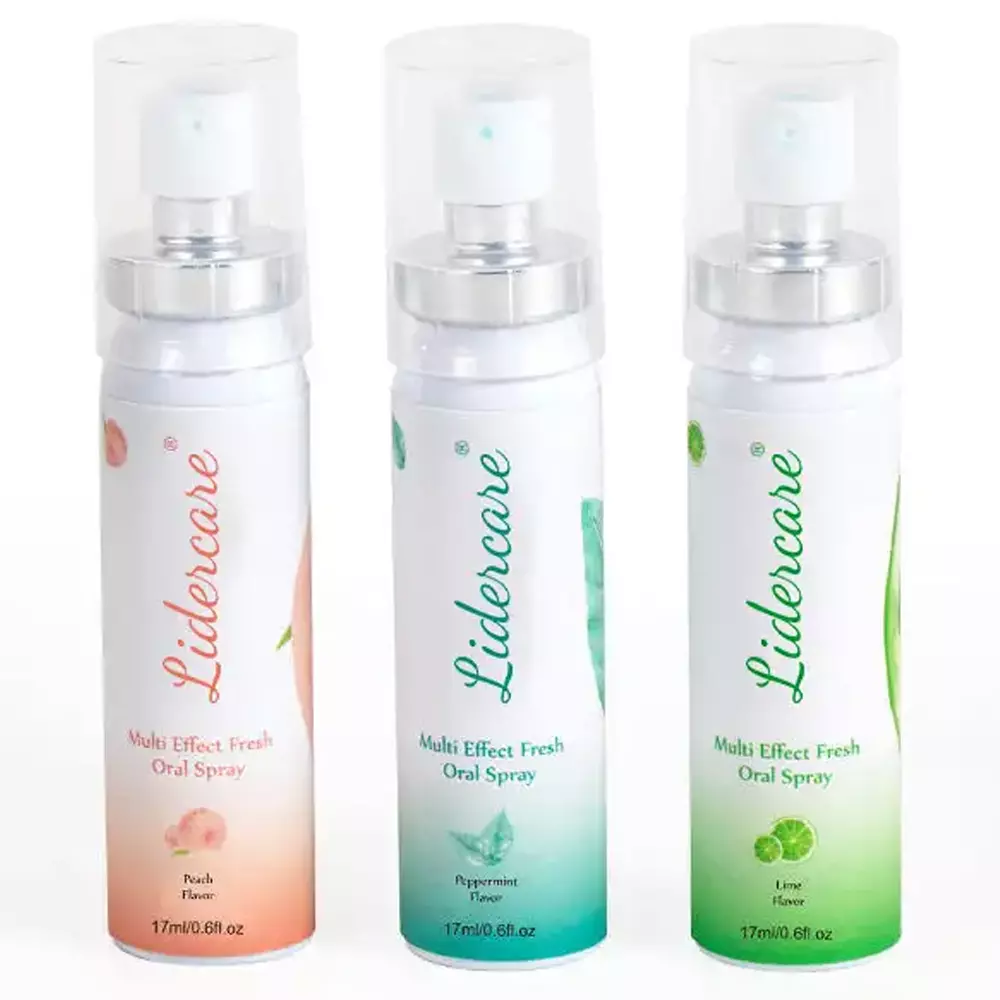
Mouth sprays for bad breath are portable, fast-acting formulations that deliver antimicrobial and odor-neutralizing agents—such as chlorine dioxide, essential oils, cetylpyridinium chloride (CPC), and zinc ions—directly to the oral cavity for immediate freshness. They work by killing or inhibiting volatile sulfur-producing bacteria and/or chemically neutralizing malodorous compounds, often providing relief for 4–6 hours per application . Alcohol-free sprays help avoid mouth dryness, and many options are sugar-free for dental health. Popular brands include LISTERINE® Pocketmist (kills 99.9% of germs) , UltraDEX Fresh Breath Spray (up to 12-hour protection) , and TheraBreath (formulated by “Bad Breath Guru” Dr. Harold Katz) .
What Is a Mouth Spray for Bad Breath?
A mouth spray for bad breath (or breath spray) is a product sprayed directly into the mouth to temporarily mask or eliminate halitosis. It generally offers a masking or antimicrobial effect lasting approximately 4–6 hours .
How It Works
Antimicrobial Agents: Many sprays contain chlorine dioxide, which neutralizes volatile sulfur compounds (VSCs) produced by anaerobic bacteria .
Cetylpyridinium Chloride (CPC): CPC at 0.05% can reduce bacterial load, though it may stain teeth or cause mild irritation .
Essential Oils & Zinc Ions: Oils like menthol, thymol, and eucalyptol have antibacterial properties, while zinc binds VSCs to reduce odor .
Key Benefits
Instant Freshness: Spray formulations act immediately on breath odor.
Portability: Small, pocket-sized bottles fit in purses or pockets.
Targeted Action: Direct application to tongue and inner cheeks where bacteria thrive.
Dry Mouth Relief: Alcohol-free variants help maintain moisture.
Common Active Ingredients
| Ingredient | Function | Notes |
|---|---|---|
| Chlorine Dioxide | Oxidizes VSCs, kills bacteria | Clinically shown to reduce halitosis in one-week use |
| CPC (Cetylpyridinium Chloride) | Antiseptic, antimalodor | May cause mild staining or burning at higher concentrations |
| Essential Oils (e.g., menthol) | Antibacterial, flavor | Provides pleasant minty taste |
| Zinc Compounds | Neutralizes sulfur compounds | Often included in sugar-free formulas |
How to Use
Shake Bottle: Ensure ingredients are well mixed .
Aim & Spray: Direct 3–4 sprays onto tongue dorsum and inner cheeks.
Swish Briefly: Distribute throughout the mouth.
Repeat as Needed: Effects last 1–6 hours per spray, depending on formulation.
Choosing the Right Mouth Spray
Alcohol-Free vs. Alcohol-Based: Alcohol-free helps prevent dryness; alcohol-based may offer stronger immediate kill but can worsen xerostomia .
Sugar-Free Formulations: Protect against dental caries.
ADA Seal of Acceptance: Look for ADA approval on packaging .
Flavor Preferences: From peppermint to cinnamon.
Frequently Asked Questions
Q1: How long does a mouth spray for bad breath last?
Most sprays provide 4–6 hours of fresh breath per application .
Q2: Are mouth sprays effective against bacterial causes of halitosis?
Yes—formulations with chlorine dioxide or CPC reduce VSC-producing bacteria .
Q3: Can I use mouth spray every day?
Daily use is generally safe, especially alcohol-free, but confirm with your dentist if you have persistent dry mouth.
Q4: Do mouth sprays replace brushing and flossing?
No. They are an adjunct for freshness and should not replace mechanical cleaning.
Q5: Are there side effects?
Possible mild irritation, staining (with CPC), or dryness (with alcohol-based sprays) .