In 2026, toothpaste remains one of the most stable and strategically valuable categories in oral care. For B2B partners—including manufacturers, brand consultants, and packaging design firms—the opportunity lies not in volume-driven mass brands, but in supporting focused, compliant, and well-positioned niche brands.
This article outlines a professional framework for building a toothpaste brand in 2026, illustrated through a fictional brand case to demonstrate how strategy translates into execution.
1. Market Context: Why Toothpaste Brands Still Enter the Market
While the toothpaste category appears mature, market saturation primarily exists at the generic level. Demand continues to grow in:
Functional specialization
Sensitive oral care segments
Professional-grade daily use products
Brands that communicate safety and credibility rather than exaggerated claims
For B2B service providers, this creates sustained demand for product development, regulatory guidance, packaging strategy, and scalable manufacturing solutions.
2. Brand Case Introduction: Project “DENTARA”
To illustrate this process, consider a fictional emerging toothpaste brand:
Brand Name: DENTARA
Positioning: Professional daily care for sensitive teeth
Target Market: Urban adults aged 25–45 with long-term dentin sensitivity
Initial Product Focus: Desensitizing toothpaste for continuous daily use
Price Tier: Mid-to-premium functional segment
DENTARA is designed as a focused, single-problem brand rather than a mass-market oral care line.
3. Strategic Brand Positioning
Consumer and Problem Definition
DENTARA’s strategy begins with a narrow definition:
Users experiencing discomfort from temperature and acidity
Preference for clinically rational formulations
Skepticism toward “instant whitening” or aggressive claims
This clarity enables B2B partners to align product development, messaging, and design around one core promise: long-term comfort without irritation.
4. Product Development and Formulation Logic
From a B2B execution standpoint, DENTARA’s formulation strategy prioritizes:
Proven desensitizing actives at effective but conservative concentrations
Fluoride inclusion for long-term enamel protection
Reduced irritants to support twice-daily, lifelong usage
Mild flavor profile to reinforce clinical positioning
Rather than emphasizing novelty ingredients, the formulation is optimized for stability, safety, and regulatory alignment across multiple markets.
5. Regulatory and Compliance Readiness
DENTARA’s go-to-market plan integrates compliance at the earliest stage:
Ingredient lists vetted for China, Southeast Asia, and EU standards
Marketing claims limited to preventive and supportive language
Packaging content reviewed to avoid medical or therapeutic overstatement
Documentation prepared for functional substantiation where required
This approach minimizes downstream risk for both the brand owner and its manufacturing and distribution partners.
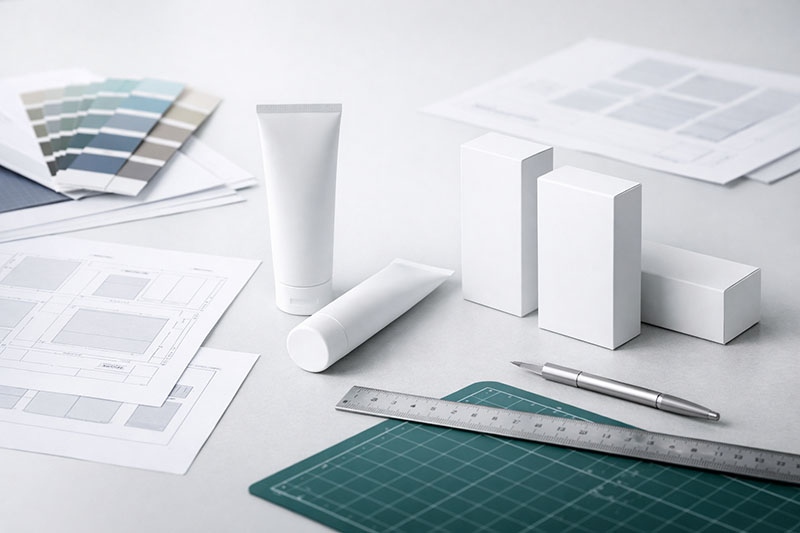
6. Packaging and Visual Communication Strategy
In the toothpaste category, packaging acts as the primary point of trust creation.
For DENTARA:
The packaging highlights one function only: sensitivity relief
Visual design emphasizes clarity, restraint, and clinical confidence
Color coding is tied directly to function rather than decoration
Information hierarchy is optimized for both retail shelves and digital thumbnails
From a B2B perspective, the packaging system is modular, allowing future product extensions without visual fragmentation.
7. Brand Identity System for Scalability
DENTARA’s brand identity is built with expansion in mind:
A name that is short, neutral, and internationally pronounceable
Typography that conveys stability and healthcare credibility
A logo system adaptable to new SKUs and sub-lines
This ensures that suppliers, designers, and distributors can support future growth without rebranding costs.
8. Manufacturing and Supply Chain Model
The brand adopts a phased production strategy:
Initial OEM manufacturing with controlled batch sizes
Emphasis on process consistency and quality assurance
Gradual scale-up aligned with market feedback
Avoidance of early overstock or unnecessary SKU complexity
For B2B manufacturing partners, this model reduces operational risk while building a long-term collaboration framework.
9. Market Launch and B2B-Relevant Marketing Approach
DENTARA’s market entry strategy focuses on:
Educational content explaining sensitivity mechanisms
Professional-aligned messaging rather than mass advertising
Selective collaboration with dental professionals and relevant KOLs
Clear differentiation from cosmetic-oriented toothpaste brands
The goal is not rapid exposure, but measured trust accumulation.
Conclusion
The DENTARA case reflects a broader industry reality in 2026:
successful toothpaste brands are built through focus, compliance, and system-level thinking.
For B2B stakeholders—whether manufacturers, design agencies, or brand strategists—the value lies in offering integrated, forward-compatible solutions rather than isolated services.
In a category defined by daily use and long-term trust, toothpaste brands are not launched—they are engineered for durability.